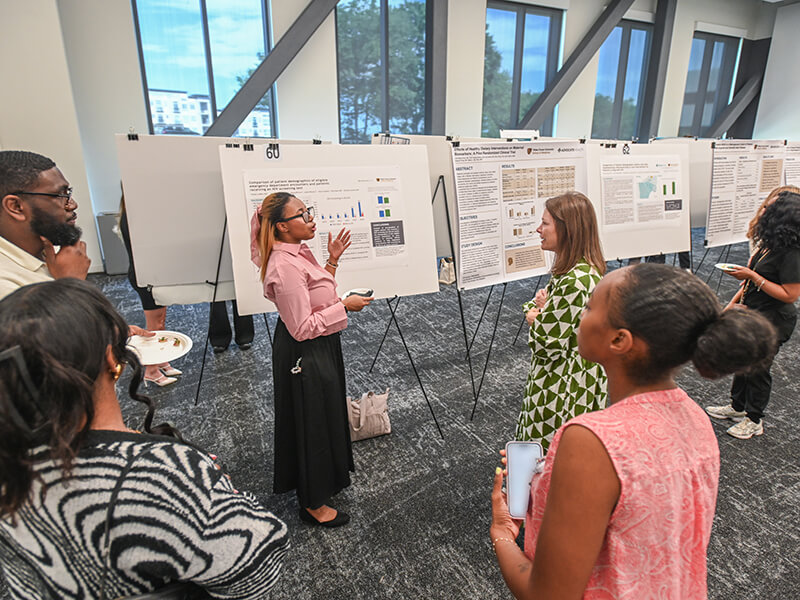
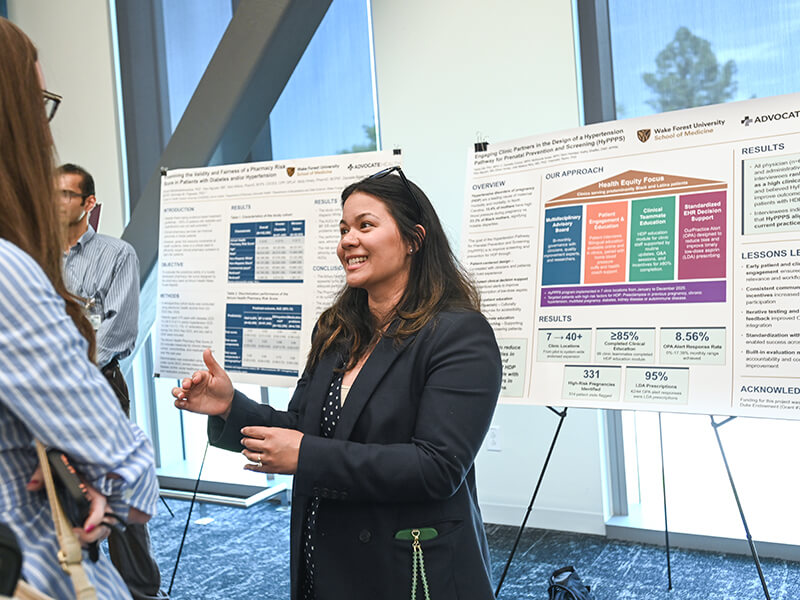
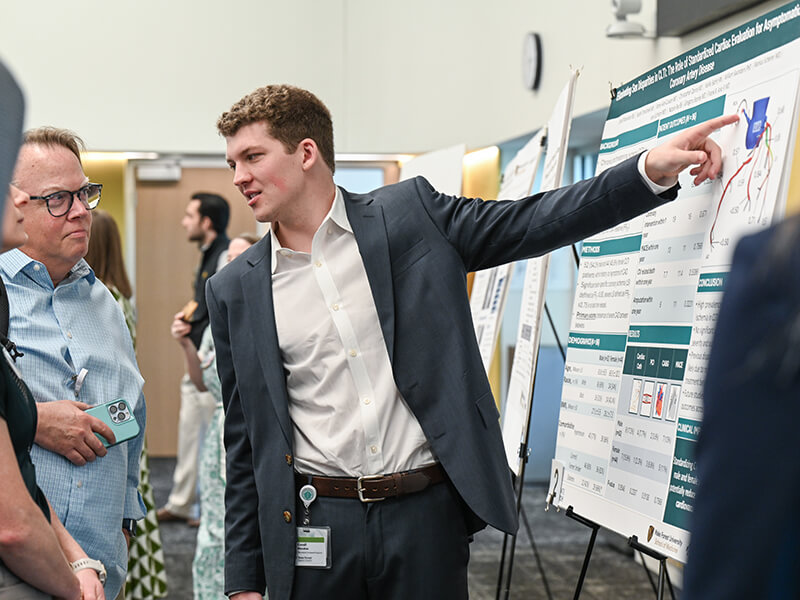
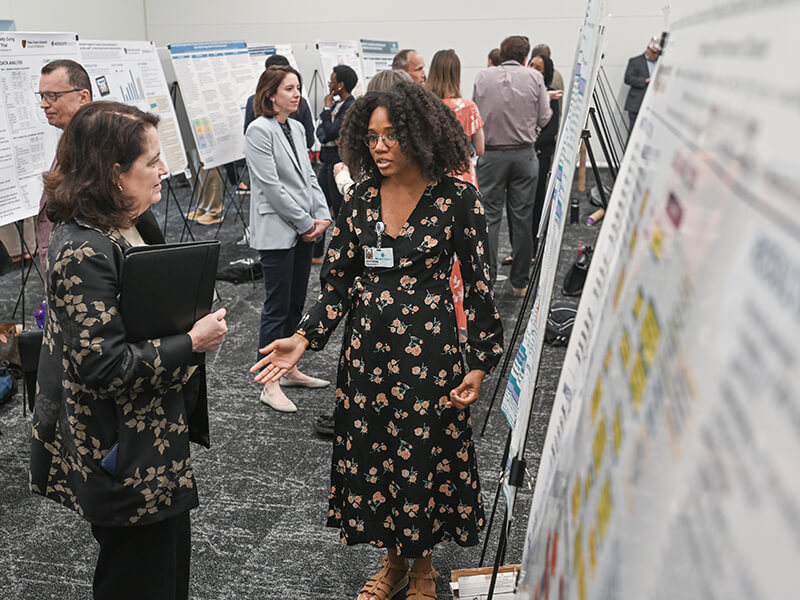
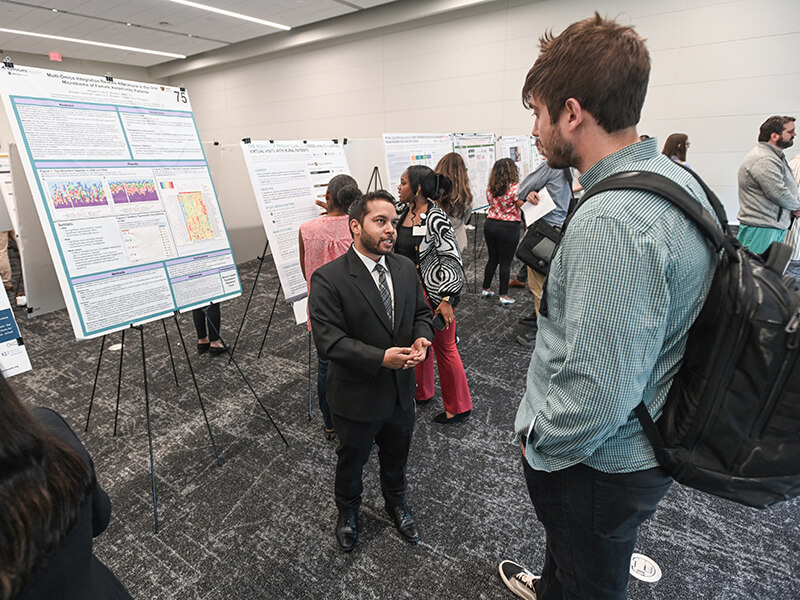
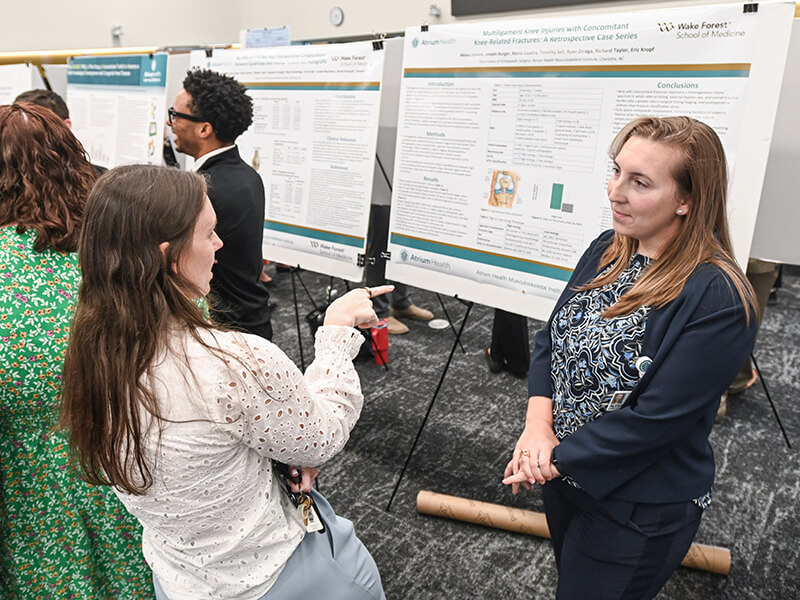
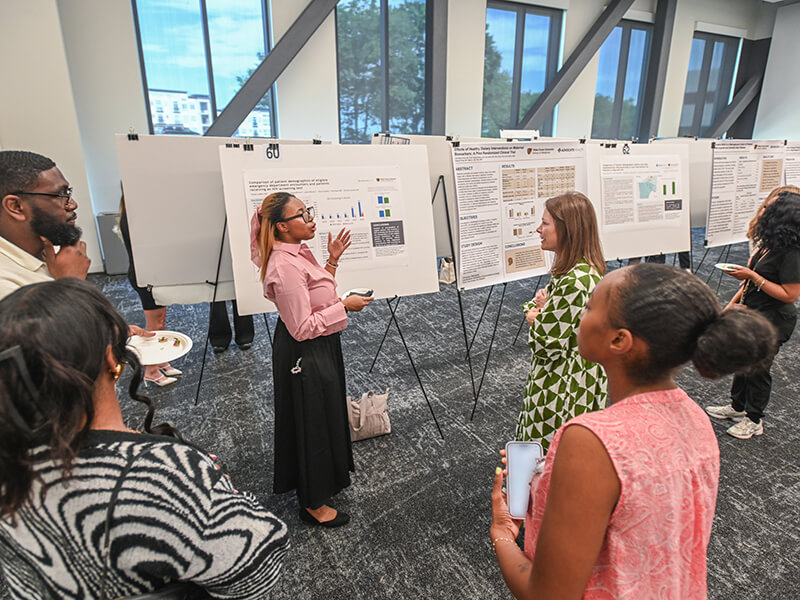
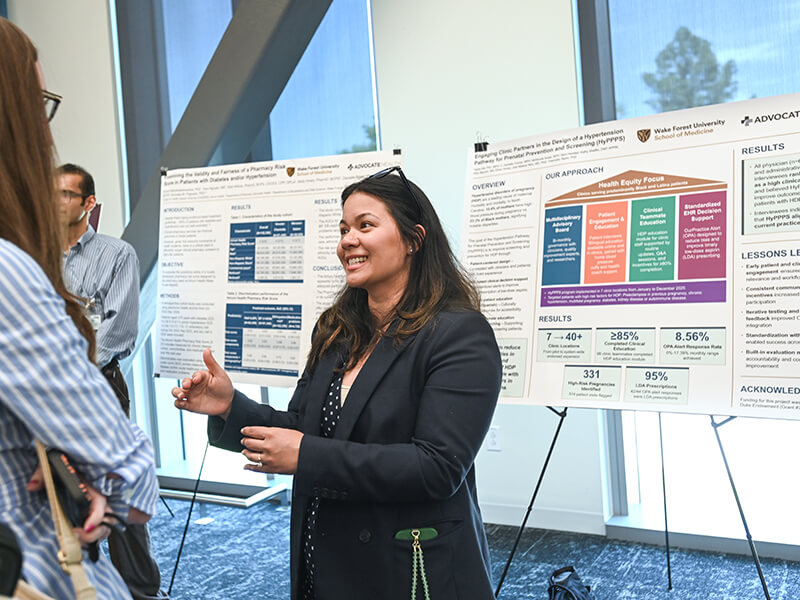
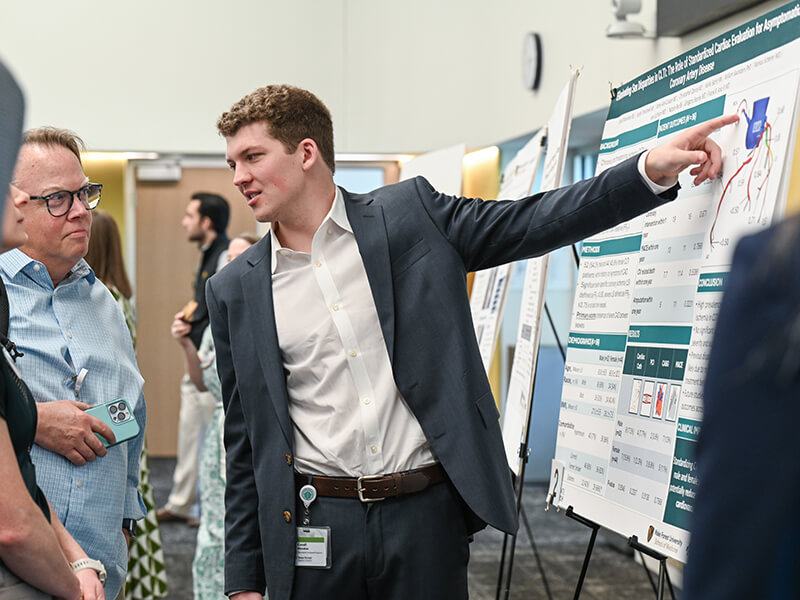
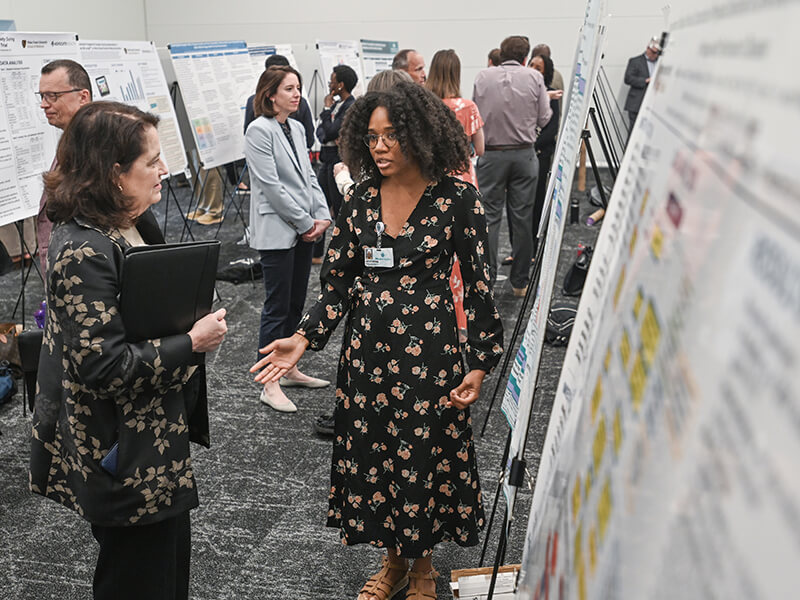
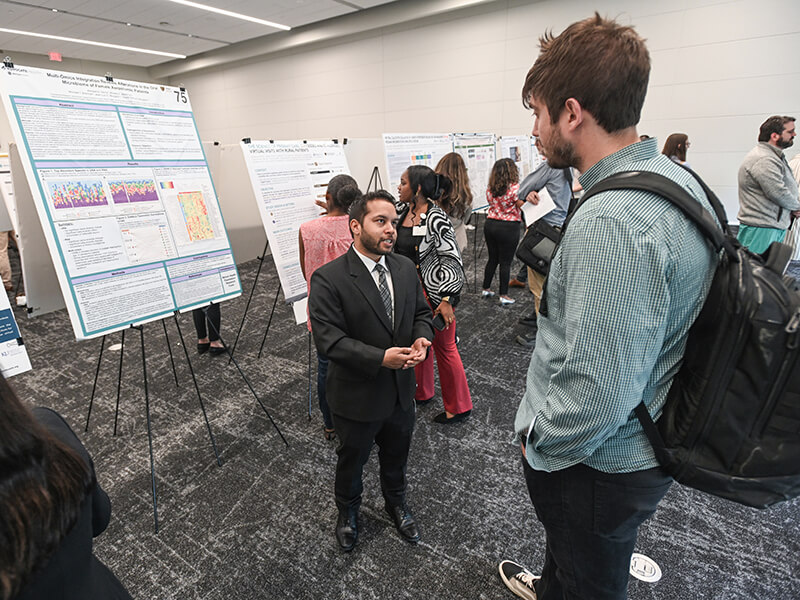
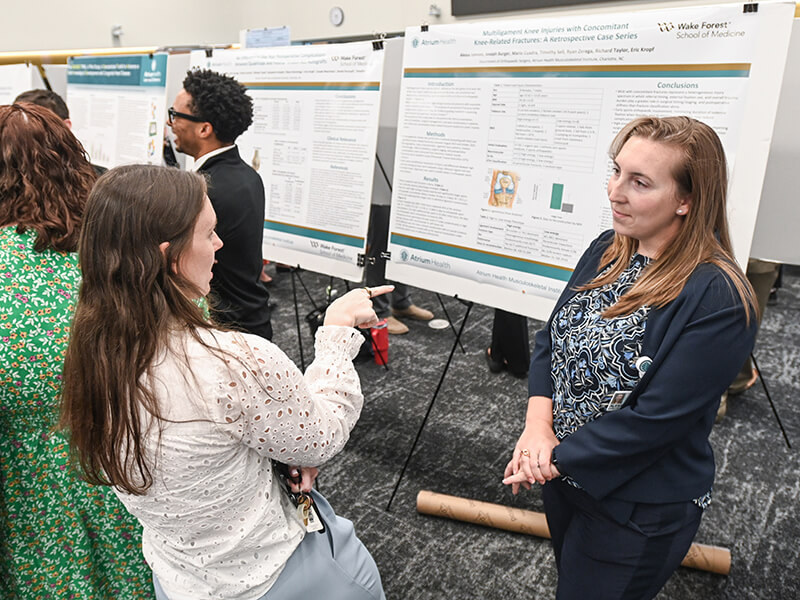
This year, Celebrate Research events were held in Milwaukee and Illinois, engaging and celebrating Advocate’s research community throughout the entire enterprise. Read more about those events.
Here is a recap of some of the notable presentations from the innovations districts in North Carolina.
Cancer Research Saves Lives
This event highlighted several ongoing research innovations across the enterprise. Powered by our care delivery sites and our districts, faculty members spoke about real-world advances they are making in immunotherapy, novel approaches to central nervous system cancers and integrative oncology.
Ruben Mesa, M.D., president of the Advocate Health Cancer National Service Line, spoke about the scale and importance of cancer research and care across the system. Throughout the discussion, he underscored the importance of collaboration across sites and disciplines to grow research impact.
Aimee Griffin, vice president of professional services, presented on a long-standing effort in Georgia to reduce barriers to mammography by bringing screening directly into underserved communities. She said many women in the service area face significant access challenges tied to lack of reliable transportation, lower household incomes and inflexible work schedules, which can make it difficult to take time off for preventive care.
This led to the creation of the mobile mammography unit, which has since expanded to other areas throughout Advocate Health. The unit meets people where they are in the community, including places of employment, churches, schools and more.
“This combination, meeting women where they are, removing financial and time barriers and providing fast answers, has been critical to improving screening rates and outcomes across rural and underserved areas of Georgia,” Griffin said.
The Pearl and Innovation Quarter create space for faculty, students and other experts to accelerate their work by connecting people and infrastructure. These districts enable collaboration at scale, helping move promising discoveries more quickly from the lab into patient care. By connecting cancer faculty and experts with students in these spaces, it reinforces Advocate Health’s commitment to ensuring innovation continues to save lives.
Beyond Boundaries: Advancing Cardiovascular Health Through Innovation and Collaboration
Cardiovascular health faculty members met at The Pearl in Charlotte to discuss several innovations and research happening to improve care for patients.
Matthew Goldman, M.D., associate professor of vascular surgery, discussed how many patients with peripheral artery disease (PAD) go undiagnosed because they don’t typically show symptoms. This is significant as patients with PAD are at a higher risk for stroke.
Because more young people are being diagnosed with PAD, Goldman highlighted how research and work around screening, prevention and medical management.
Oguz Akbilgic, Ph.D., professor of cardiovascular medicine, highlighted how he is using AI to solve a heart failure problem in the United States.
He noted more than 6.7 million Americans are living with heart failure and 50% of them have a five-year mortality rate. Because of this, there is a $56 billion economic impact every year.
Akbilgic said because 50% of U.S. counties don’t have a cardiologist, it is important to find ways to use technology to help diagnose heart failure.
His research and efforts at Wake Forest University School of Medicine have focused on creating an AI model to detect electrocardiograms and use tools like smartwatches to detect heart failure earlier.
Research at Scale, Designed for Impact
Other events at the districts included events focused on pediatric research, imaging, highlights of the Clinical and Translational Science Institute, brain metastases, addiction science and care and embedding pragmatic trials across Advocate’s system. At The Pearl, it also included a tour of IRCAD North America, a world-class surgical training, research center and international hub for medical innovation.
Together, Advocate Health’s innovation districts, academic partnership and care delivery network create a research ecosystem designed to operate at scale — translating discovery into practice faster and more equitably.
By connecting faculty, clinicians, students and industry partners across disciplines and geographies, Advocate Health is uniquely positioned to turn discovery into action, advancing science from the lab to the bedside and shaping healthier communities for the future.